
Last month, we talked about pricing your pottery. This month, we're moving on to everything else that goes into preparing for a successful show. With the Blue Ridge Potters Guild Show just around the corner, many of us are busy making those last few pots, finishing glaze firings, and wondering how we're going to fit everything into our cars - mine fits together much like a game of Tetris.
Whether you're participating in your very first Guild show or you've been doing shows for decades, there's always something new to learn. What makes a good show? We did a little digging, and reached out to experienced Guild members for their advice, and one offered a particularly good starting point:
"A good show is one that meets or exceeds expectations."
That sounds simple enough, but it raises an important question: What are your expectations? Kind of like in our pricing blog, expectations may differ based on what you need out of the show. For some potters, a good show means meeting a sales goal. For others, it might mean introducing their work to new customers, testing a new design, having fun and supporting the Guild, or simply enjoying a weekend surrounded by people who love pottery.
Whatever your goals, a little preparation can make the experience considerably easier. So let's talk about getting ready, setting up an inviting display, and making the most of your time at the show.

Before the Show: Plan for Success
Know your audience and plan your inventory
Now given, we’re a bit late in this moment (mere weeks from our 2026 show) for this first part since most of the making is likely close to being done. But since this post doesn’t only apply to the BRPG show, it must be said that one of the very first things to consider when prepping for a show is what work you want to bring. Are you introducing a new collection? Do you have particular pieces that have consistently sold well? Are you bringing a mixture of functional pottery, decorative pieces, and larger statement work? Consider the audience, too. A holiday show may attract customers looking for themed gifts and seasonal decor, while a juried art festival may draw more people looking for distinctive or collectible pieces.
It can also be helpful to bring a range of work. A customer who loves a large serving bowl but isn't ready to make that purchase might happily take home a smaller piece featuring the same design. And don't forget to think about how much inventory you'll need. You don't necessarily have to display everything at once. Having a few pieces packed and ready to replenish your shelves can keep your display looking fresh throughout the show.
Setting your production goals and schedule ahead of an anticipated show helps streamline the process, and doesn’t leave you scrambling at the end to wonder if you have enough of “x,y,z” item. Which leads into…
Get the little things done early
We all know the temptation to squeeze in one more kiln firing before a show. Sometimes it works out beautifully. Sometimes you're still sanding bottoms and attaching labels when you should be loading the car (this is me). If at all possible, try to give yourself some breathing room before show day. Finish and inspect your work, organize and pack your inventory, and make sure everything is properly labeled. Have a snack. Drink some water!
For the BRPG show, every piece needs its own barcode label. Check that labels are secure, readable, and attached according to the show instructions. Remember that customers will be taking individual pieces to the shared checkout, so every item needs to be identifiable on its own. If you're bringing additional inventory to restock your display, label those pieces ahead of time, too.
IMPORTANT: If you are selling something that has multiple loose components, it is helpful to make it VERY CLEAR, whether by packaging, or by indicating on a label in some way that there are multiple components to the item being sold. This saves those working checkout time to hunt down folks and figure out if something is priced correctly or if we’re missing labels.
A little organization at home can save a lot of frustration once you're at the show.
Let people know where to find you!
You don't have to be a social media expert to promote your participation in a show. If you have an email list, website, Instagram, Facebook page, or even a group of friends who love your pottery, let them know you'll be participating! One experienced Guild member recommends planning a few communications leading up to a show, featuring good photographs of new work and pieces you expect to be popular. Rather than showing everything at once, highlight a few pieces at a time and give people something to look forward to.
You might share a photograph of a new collection, a glimpse of your work in progress, or a favorite piece you'll be bringing. People also love to see images of you working in your space, creating pots! People really appreciate it when you show, demonstrate, or explain the idea behind your creation and what makes it special.
And remember, you don't have to use every platform. Some potters maintain customer email lists, others rely on social media, and some build relationships through personal conversations and repeat customers. Choose what works for you. Just make sure people know when and where they can find your work!
For the BRPG show, we also send out postcards, make bookmarks, put out yard signs, setup library displays, and work with different media outlets to get the word out on the show. A successful show for our Potters on an individual level also serves the community aspect of the Guild in funding outreach initiatives, hosting workshops, and more.

Creating a Display That Invites People In
Also something to consider and practice before the show, is creating a display to show off your pots. You can make beautiful pottery, but if customers can't see it, reach it, or understand what they're looking at, you may be making it harder for them to appreciate your work. A good display doesn't have to be elaborate or expensive, and there isn't one correct way to organize a display. The goal is to make it inviting and easy to explore.
Give your pots some breathing room
One of the most common display challenges is trying to show everything at once. It's understandable. You worked hard to make those pots, and you want customers to see all of them! But too many pieces crowded together can become visually overwhelming. When everything competes for attention, individual pieces can get lost. Here are a few tips to help you out:
Try grouping similar work together, leaving some open space, and creating areas that naturally draw the eye. This could be groups of similar items, or even items of similar color/design.
A few thoughtfully arranged pieces can sometimes make a stronger impression than a table packed edge to edge. If you have a really special piece, don’t let it get lost in the chaos, build a space for it to draw the eye and make it shine!
If you have additional inventory, keep it in boxes beneath or behind your display and replenish at the end of the day, in the morning, or during a really slow period. Restocking your space when people are packed in won’t work well for you or the customer.
Think vertically
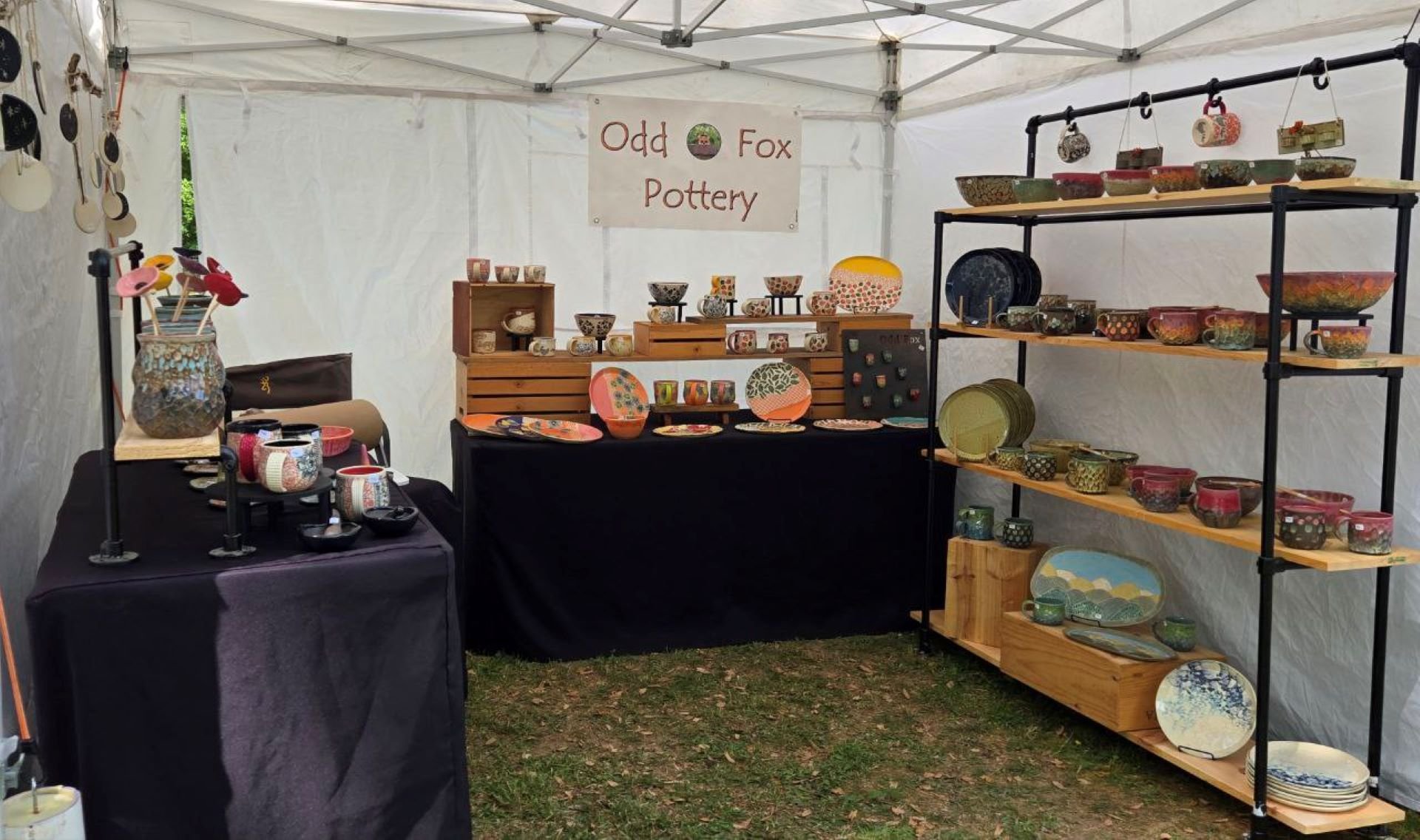
One of the simplest ways to improve a display is to add height. If everything sits flat on a table, customers mostly see the tops or inside of your pots. Shelves, risers, stands, and small display platforms can help bring work closer to eye level and make it easier to appreciate different forms. Think of a gorgeous bowl with an intricate design on the outside, but all the customer sees is a single glaze on the inside. While most people may pick up an item to give it an overall inspection, they are far more likely to pick up a pot if they can see the coolest features of it from the get go.
You don't need expensive display furniture for this! Sturdy wooden boxes, small shelves, or simple risers can make a big difference. Try creating a few different heights rather than one continuous flat surface. This gives your display more visual interest and helps certain pieces stand out. Just make sure everything is stable! Pottery and wobbly shelving are not a combination we recommend.
Give customers something to notice
Consider choosing a few pieces to act as focal points. Maybe it's a beautifully carved vase, an unusually glazed platter, or a particularly colorful collection. Place those pieces where they're easy to see, then arrange related work around them. You can also group pieces by color, function, collection, or design. A collection of matching mugs and bowls can tell a visual story, while a carefully arranged group of different forms can demonstrate the range of your work.
Don't forget lighting and backgrounds
Our Guild show takes place indoors, so you don't have to worry about setting up a tent, wind blowing over your display, or rain soaking your tablecloth. That's a nice perk of indoor shows! But indoor spaces bring their own challenges, particularly lighting. School cafeterias aren't necessarily designed to showcase artwork. Pay attention to how the overhead lighting interacts with your glazes, especially on darker or highly reflective pieces.
For this show, we don’t have the means to add additional electricity to each booth, but there are options for battery LED lights and other things which you might want to consider. I’ve brought large battery banks with me (for camping and such) that allow me to plug in all sorts of things, one year it was tent lighting, another year it was specifically for hanging lights. If you’re ever doing a show that does have electricity, or an outdoor show that runs late when the sun starts to wane, lighting really becomes a necessity, or at least something to consider improving your booth with. It may help highlight certain areas of your display. Just be mindful of cords, outlets, and any show restrictions.
Your table covering and display materials matter, too. Simple, relatively neutral backgrounds can help colorful or highly decorated pottery stand out. Clean and wrinkle-free table covers that reach the floor look great and are helpful for hiding extra inventory and packing materials. If your work is more understated, a little contrast or texture may help. Table covers come in all sorts of colors too!
Can customers actually shop your display?
This is one of the most important questions to ask yourself once everything is arranged. Step back and look at your display from the customer's perspective.
Can you see the pieces clearly? Can you safely pick up a mug without knocking over three bowls? Are smaller items hidden behind larger ones? Can you reach the pieces at the back? Here’s an example from my experience- in my booth I felt a bit weird putting things on this one particular tall shelf, but I’m short (5’2”). It’s comfortable for me, certainly easier for anyone taller than me, but I might want to offer help to anyone shorter who pops in and has their eye on something way up there. That top shelf is also reserved for things that have an interesting exterior since most people won’t see the inside of the piece (thinking back on giving customers something to notice).
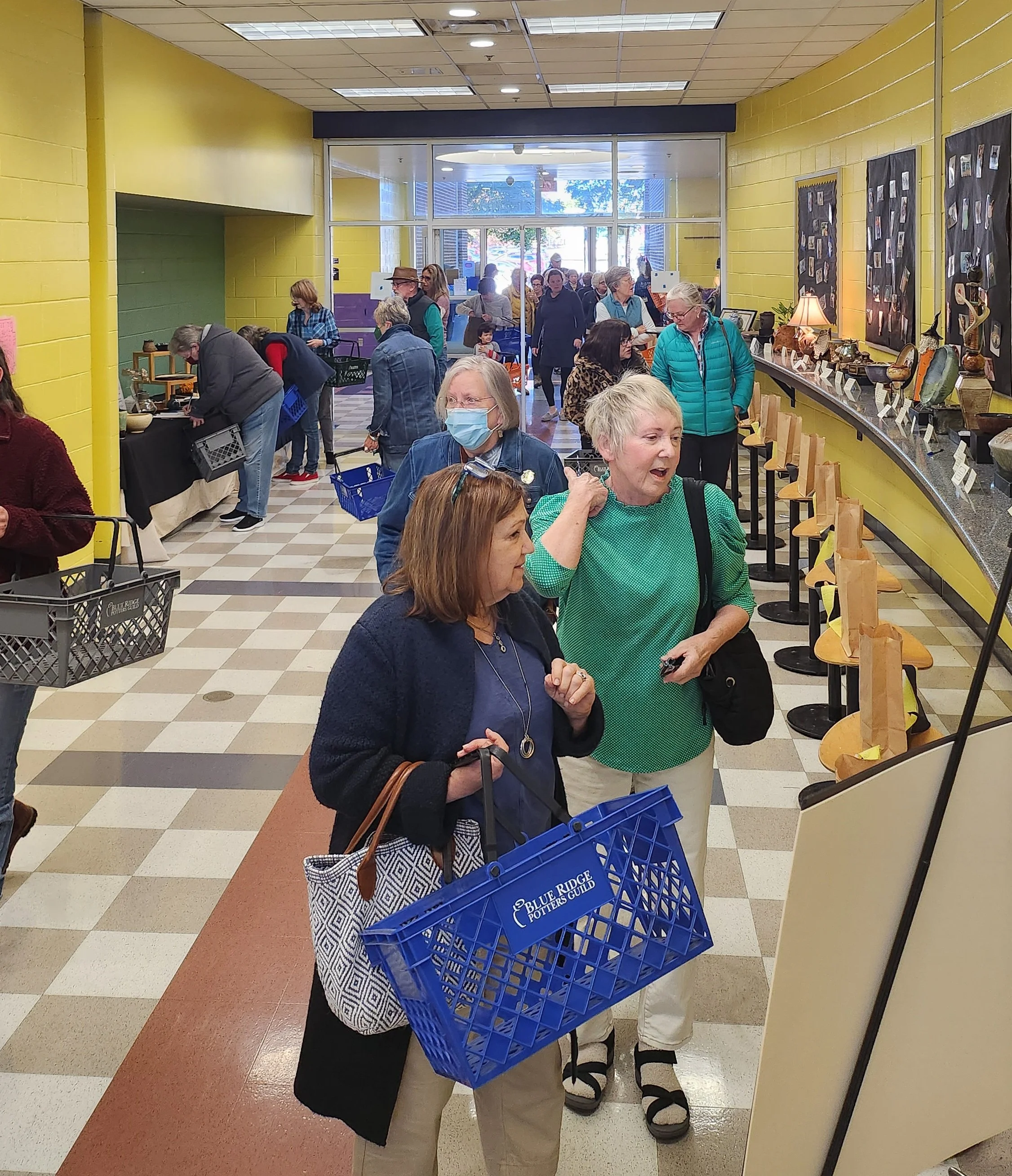
At the BRPG show, customers select pieces from individual displays and carry them to the shared checkout. That makes accessibility especially important. Try not to create arrangements that look beautiful but are difficult to shop. And if you're displaying something unusual, such as a specialized kitchen tool or decorative object whose function isn't immediately obvious, consider a small sign explaining what it is.
Your pottery may have to speak for itself when you're not standing beside it, especially since you’re likely working away from your booth at some point during the weekend at this show.
Practice your setup
If you're using a new display or changing your layout, try setting it up at home first. You don't necessarily need to unpack every piece. Just arranging your shelves, risers, table coverings, and a few representative pots can help you identify problems before show day. This is particularly useful when you're working with a limited display space. Many spaces in shows are 10’ x 10’ but there are different space sizes for this show in particular. Double check your space and make sure you know what you’re working with!
It also matters if you’re in the middle of a row, or at an end or corner space. This allows you to setup your booth in different ways to draw people in.
Take a photograph once you've arranged something you like. That way, when you arrive at the show, you have a reference rather than trying to remember where everything went.
Packing and Loading: Make Life Easier for Future You
Packing pottery for a show is a skill in itself. You want everything to arrive safely, but you also want to be able to find what you need without unpacking six mystery boxes.
Quick tips:
If you have a cart or dolly, bring it. A folding wagon can also be useful, particularly when you're moving multiple boxes from the parking lot and through a building.
Consider packing a separate box or bag with the things you'll need immediately: tape, scissors, extra labels, pens, cleaning cloths, display hardware, and other small supplies.
Before the show, review the Guild's instructions for arrival, unloading, parking, and setup. Give yourself enough time to unload, move your work into the building, assemble your display, and arrange your pottery without rushing. Be considerate of other potters who are trying to do the same thing. Unload efficiently, move your vehicle when required, and keep shared pathways clear. The same goes for load-out. Pack your work carefully, break down your display, and leave your area clean.
On show days, you’ll need to park your car in a lot on the other side of the school, the close parking should be reserved for customers. On Sunday once the show is complete and you’ve packed up, you can go grab your car and move it closer for loading.
During the Show: It's a Team Effort
If you’ve done other shows, you probably know that you’re in charge of every aspect of selling, charging, and packing your work for customers. One of the things that makes the BRPG show special is that we're not simply a collection of individual vendors selling from separate booths. We're hosting a show together.
Customers can browse work from all of our participating potters and make their purchases through one shared checkout. That makes the experience convenient for shoppers, but it also means the show depends on all of us doing our part.
Show up for your volunteer shifts
This one is especially important.
Our shared checkout and other show operations rely on Guild members volunteering their time. If you're scheduled for a cashier or checkout shift, please arrive on time and be ready to help when your shift begins. When someone arrives late, another volunteer may have to stay beyond their scheduled time, or the checkout area may be left short-handed during a busy period, which impacts our customers.
Take a moment before the show to double-check your assigned duties and shift times. Make sure you know where you're supposed to report and what you'll be doing. If something unexpected comes up, communicate with the appropriate show organizer (Judy or Mary) as soon as possible.
A smooth checkout benefits every customer attending and potter participating in the show.
Take care of yourself, too
Shows can be surprisingly tiring, even when you're not running a traditional booth all day. Between setup, volunteer duties, chatting with customers, and the general excitement of the event, it's easy to forget to eat or take a break. Our Guild show has the benefit of a shared break space where members can rest and enjoy snacks. Make use of it!
Bring water, wear comfortable shoes, and give yourself time to recharge when your responsibilities allow. A little preparation for your own comfort can make the weekend much more enjoyable. Snacks and water! Snacks and water!
Be a good neighbor
One Guild member shared a particularly nice piece of advice: respect and support other exhibitors, and help customers find what they're looking for, even if that means directing them toward another potter's work. With so many different styles and approaches to ceramics represented at our show, there's an extraordinary amount for customers to discover.
If someone is looking for a particular type of pottery and you know another Guild member makes it, point them in the right direction. The variety of work is one of our strengths, and helping customers explore it benefits the show as a whole.
One Last Thing Before the Doors Open...
Here's a quick checklist to help you get ready:
Finish, inspect, and clean your pottery
Make sure every piece has its required BRPG barcode label
Organize and safely pack your inventory, including restock pieces
Check your display dimensions and practice your layout
Pack shelves, risers, table coverings
Bring a small supply kit with tape, scissors, pens, cleaning cloths, and other essentials
Prepare artist signage, business cards, or other contact information
Let your customers know when and where to find you
Review load-in, parking, and setup instructions
Double-check your volunteer assignments and shift times
Pack snacks, water, comfortable shoes, and anything else you'll need for the day
A good show doesn't require a perfect display, the fanciest shelves, or selling every single piece you bring. It takes thoughtful preparation, a willingness to learn, and, especially for our Guild show, a group of potters working together to create a welcoming experience for customers. And if something doesn't go quite as planned? Take notes. There's always the next show!