
The Right Tool for the Job
How AI helped turn studio photos and a handwritten list into a useful dry-materials inventory
My glaze materials had reached the familiar studio condition known as ‘I know it is in here somewhere.’ Some containers were clearly labeled, some were marked in fading handwriting, and some had been sitting on a shelf long enough to qualify as senior members of the pottery community. I wanted one inventory that told me what I owned, who made it, the product number when available, and approximately how much remained.
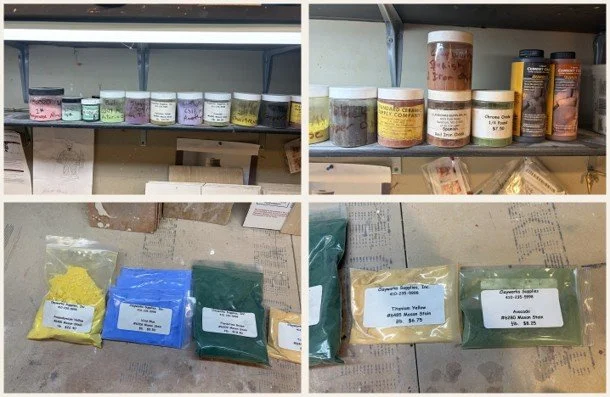
The first step was not sophisticated: I took photographs. Several pictures showed the colorant jars and bags on my shelves. Another picture showed a handwritten list of the larger dry materials I had already weighed. Those ordinary phone photos became the raw data for the project.
I then gave the photos to AI with a specific assignment: identify the dry colorants, organize Mason stains before oxides, record brand and identification numbers, and express the remaining quantities in grams. That last instruction mattered. Grams are far more useful than ‘about half a jar’ when I am planning glaze tests or deciding what to reorder.
From photographs to a working inventory
AI read printed labels, interpreted my handwriting, separated product names from identification numbers, and sorted the entries into a consistent structure. It also noticed duplicates. Two Avocado containers could become one inventory line; the same was true for Spanish red iron oxide. Because the goal was dry goods, liquid cement colorants and liquid underglaze were deliberately left out.
The container photographs did something else that surprised me: they allowed AI to estimate quantities. From a known package size, the container dimensions and the visible fill level, it could make a practical estimate of the material remaining and convert that estimate to grams. That is measurement in the useful studio sense, not laboratory analysis. The spreadsheet therefore labels those amounts as visual estimates, rounded to practical numbers. When precision matters, the scale still wins.
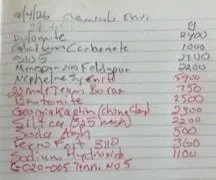
The handwritten list required the same kind of supervision. AI correctly turned E020 Tennessee No. 5 ball clay at 20 pounds into 9,071.85 grams, rounded to 9,072. It also organized dolomite, calcium carbonate, Standard 105, Minspar 200, nepheline syenite, borax, bentonite, Georgia kaolin, silica, soda ash, Ferro Frit 3110 and sodium hydroxide into the same practical format.
AI is a little like GPS
I think of AI the way I think of GPS. GPS is remarkably good at helping me reach a destination, but I still need a pretty good idea of where I am going. I need to enter the right destination, notice when the route makes no sense, and recognize whether I have arrived at the place I intended.
AI works the same way. My destination was a two-tab dry inventory measured in grams—not a general list of everything colorful in the studio. That goal let me check the route. Were liquids excluded? Were duplicates combined? Did the names match the labels? Did a weight conversion pass a common-sense test? Without a destination and those checks, a beautifully formatted answer could still take me to the wrong place.
A hammer, a FANG and artificial intelligence
Tools do not need to be new to be first class. I have a 16-ounce, leather-handled Estwing hammer that is about sixty years old. It fits my hand, has survived decades of work, and remains an excellent hammer. I also have a brand-new Mudtools FANG scoring tool. It is purpose-built for clay and is already the right tool when I need an aggressive, reliable score before joining pieces.
Both tools are first in class. They should never be mixed up in use. The Estwing would be a terrible scoring tool unless my goal were to flatten the pot. The FANG would be a terrible hammer unless my goal were to ruin a good pottery tool without driving the nail. Excellence does not make a tool universal; it makes the tool exceptionally good at the job it was designed to do.
AI belongs in that same category. It is excellent at reading patterns, transcribing mixed information, converting units, sorting records and formatting a spreadsheet. It is not a substitute for knowing my materials, checking a label, weighing something when accuracy matters, or deciding how the inventory will be used. The judgment stays with the potter.
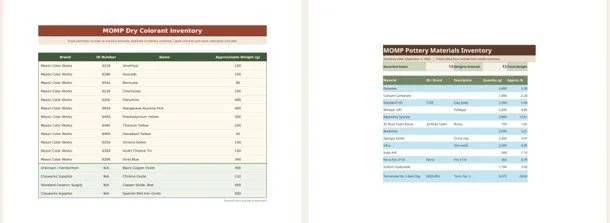
The final workbook is simple, which is exactly what I wanted. One tab lists dry colorants by brand, number, name and approximate grams. The second lists the larger dry materials, their descriptions, gram weights and approximate pounds. It gives me a better starting point for glaze development and a better defense against buying another bag of something I already have.
The larger lesson is not that AI performed magic. It is that a capable tool, aimed at a clear goal and checked by someone who understands the work, can remove a lot of drudgery. My Estwing does not know where the nail belongs. My FANG does not know which seam needs scoring. GPS does not choose my destination. AI did not inventory my studio by itself. I inventoried my studio—with a very good tool.
I enjoy the process of writing. As part of this AI experiment, however, I instructed AI to write this entire blog. I made no edits to its initial draft; I added only this final paragraph. I never want AI to do my writing for me—writing is part of the creative process—but I am pleased to have found a tool that can help me improve my skills.
-Andy May
Muddy Old Man Pottery